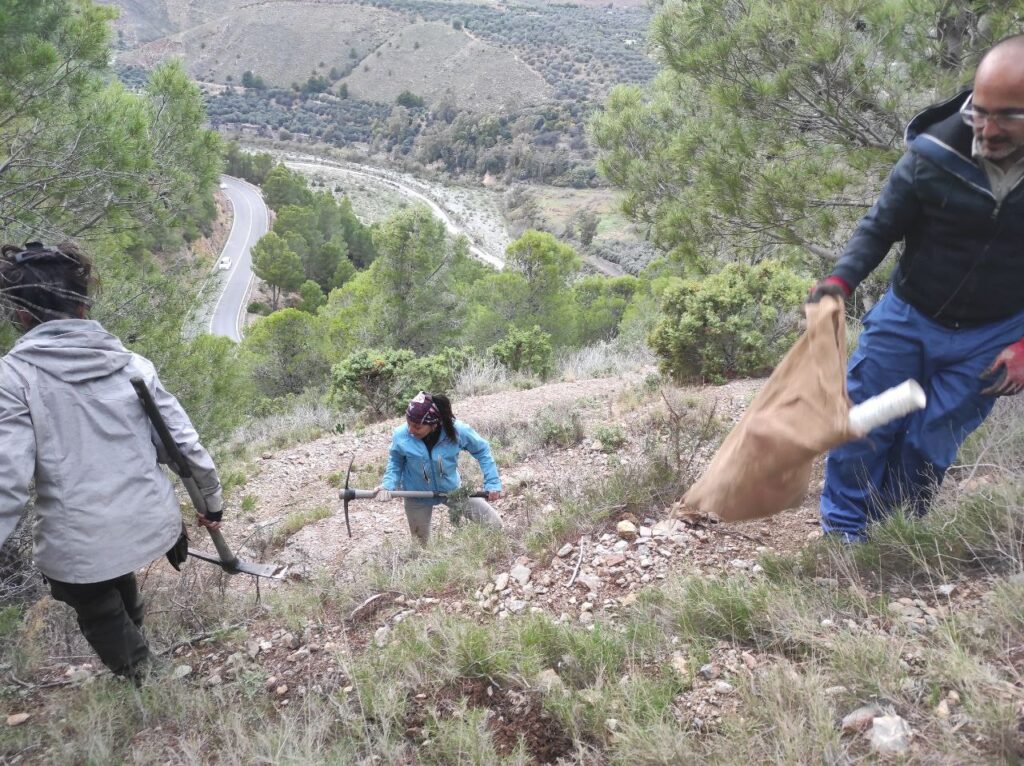
In early November, we experienced something unusual in our area: generous rainfall, between 100 and 150 liters depending on the location, which fell early and gave us an opportunity we had been waiting for for years. Thanks to this early rain, we were able to plant our first crops of the year earlier than usual and start a small experiment that we were eager to get underway.
Until now, we had sown in January or February, but this time we decided to bring the process forward to observe any differences in plant survival during their first summer, especially in low-altitude areas, where the heat arrives very early. With this in mind, we planted in Los Guájares, on a farm in Órgiva, and on the Camino de los Mineros, at altitudes ranging from 500 to 800 meters.
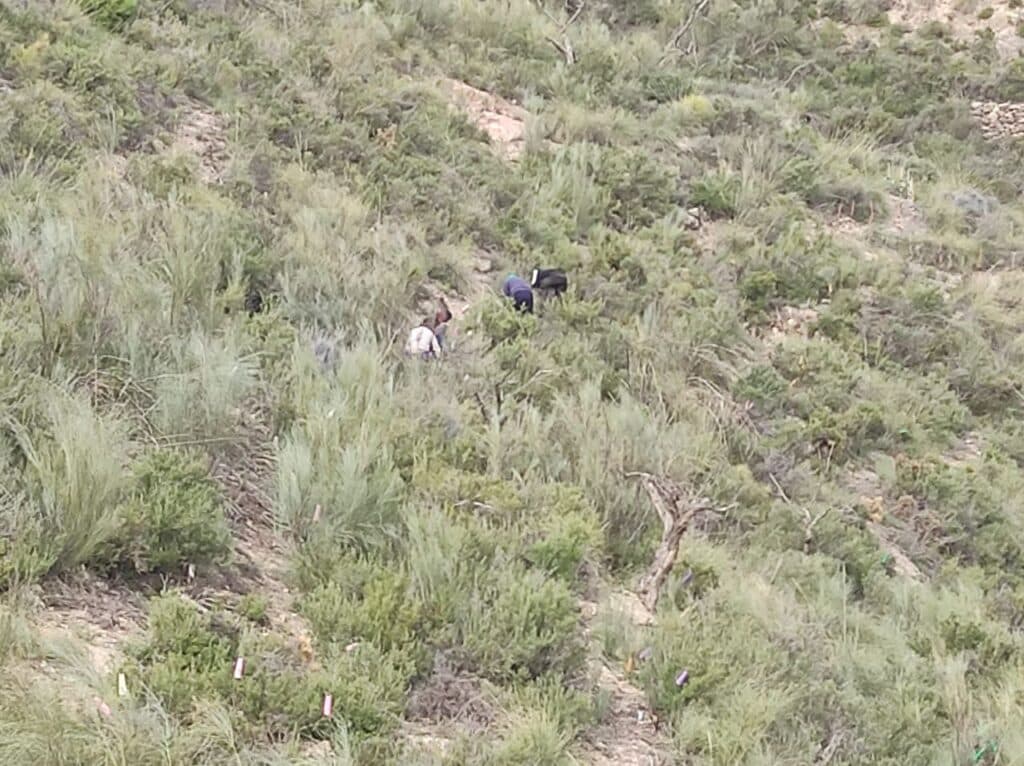
We visited areas with very different histories: some burned three years ago, others five decades ago, and some that had undergone agricultural abandonment before regenerating. In all of them, we found diverse landscapes with vigorous shrubs and, in many cases, very few trees, confirming the need to diversify species and accompany nature in its recovery.
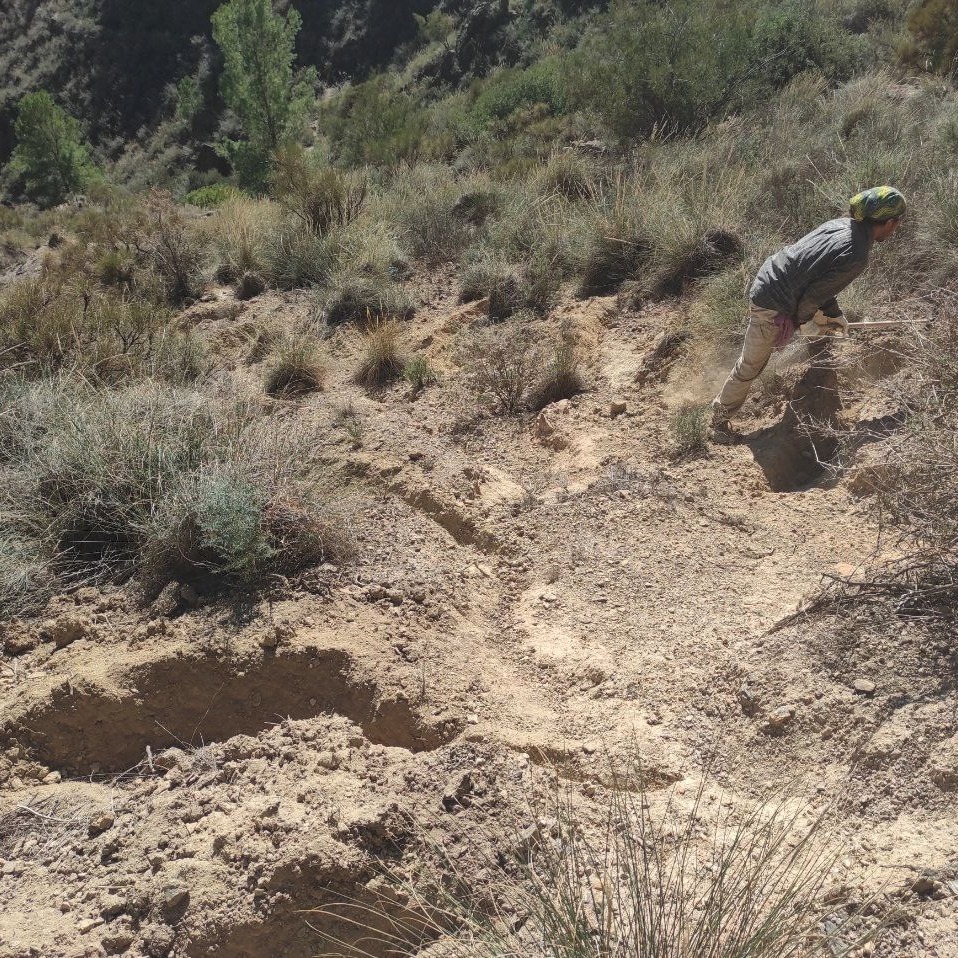
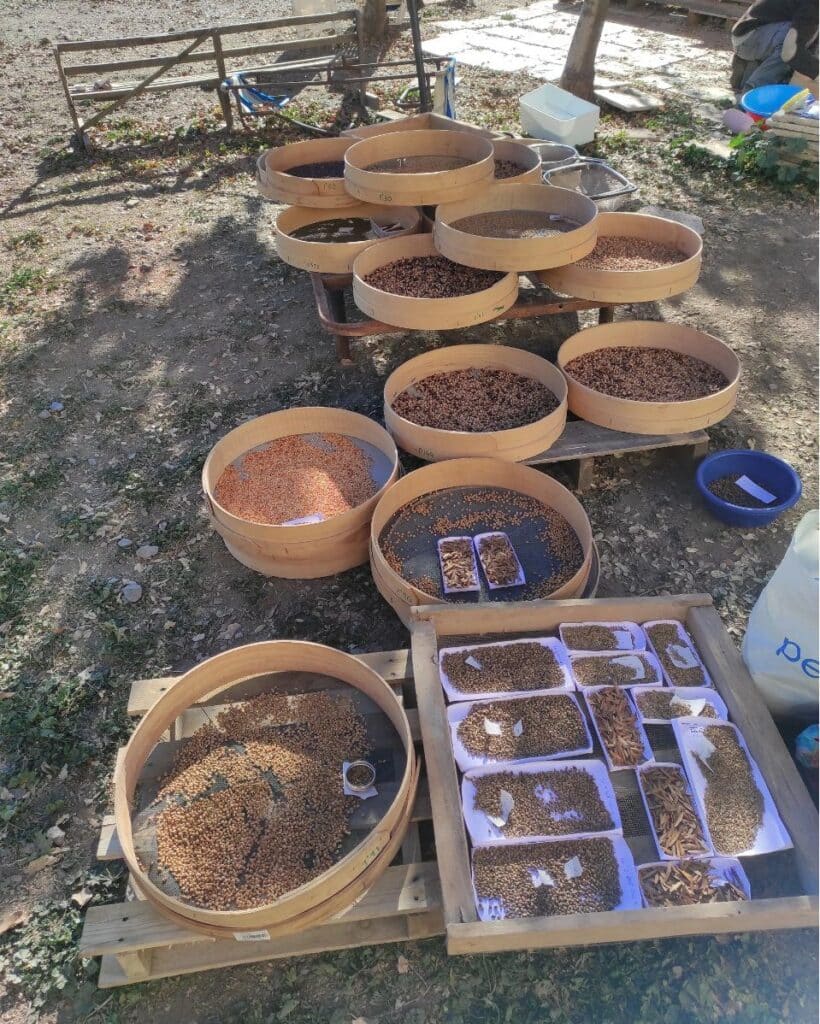
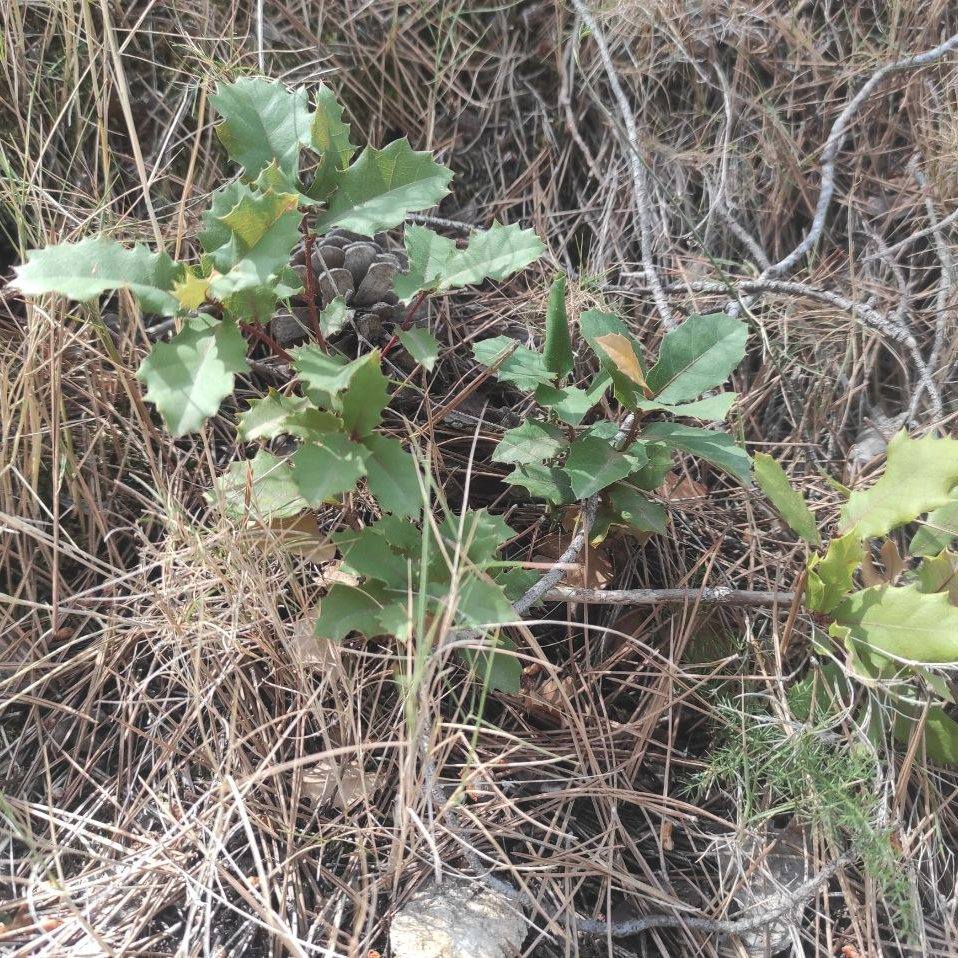
In these areas, we carried out experimental sowing with small seed species, such as buckthorn, mastic, broom, bolina, carob, and Cartagena cypress. In addition, we are testing a new sowing method to avoid mistakes we have detected in previous seasons and improve results in the future.
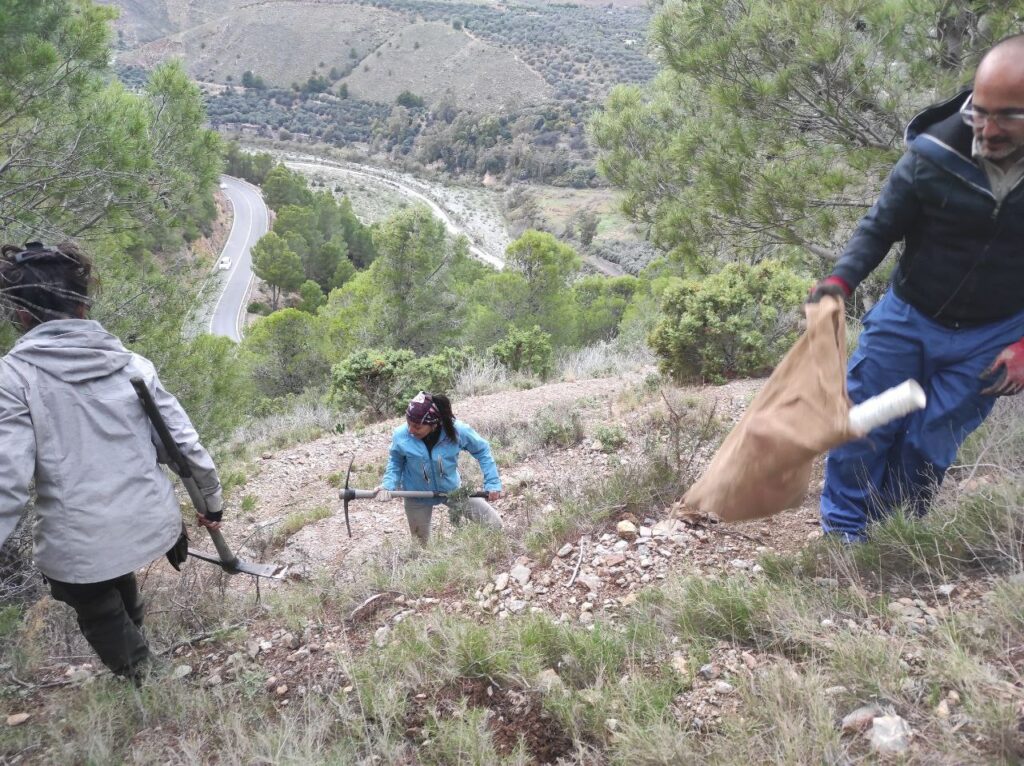
As always, the work is carried out on foot, observing and learning, accompanied by a dedicated team, willing to plant the forest and put up with the minor inconveniences along the way. Each of these days helps us to continue refining our methodology and to better understand how to work with the rhythms of the land.